









How to Clean Cat Pee From Carpet | Eliminate Urine Odor

Introduction
In this article, we share the easiest and most effective way to remove cat urine from carpet, including:
- How to find all the cat pee on the carpet
- The most effective carpet cleaners for odor elimination
- The best technique to remove all traces of cat pee from the carpet
- How to clean really tough carpet smells and stains
- How to deter your cat from peeing on the carpet again
- Tips for cleaning other items in the home, such as beds, couches, and clothes, and other surfaces, such as wood and concrete
To find out the causes and solutions for a cat not using the litter box, read Why Is My Cat Peeing Everywhere and How Do I Stop Them?
How to Find Where Your Cat Peed
It's essential to find and neutralize all the pee, as not only will your home smell better, but if your cat detects urine with their keen sense of smell (they have 40x more smell receptors in their noses than we do), they will continue to view the carpet as a toilet and continue to pee on it.
A UV light, such as Simple Solution Urine Detector, is the best way to find all the cat urine on your carpet. Shine the flashlight up and down the carpet in a methodical pattern, so you don't miss any stains. Any urine present will fluoresce (glow). However, fresh urine may not show, whereas dry urine usually does. It's best to check at night with the lights off so the glow is more obvious.
Other substances may also fluoresce, such as cleaning products (especially if they contain optical brighteners) or bits of white fluff and paper. However, they usually glow blue-white, whereas urine tends to be seen as a fluorescent yellow or yellow-green stain. Additionally, urine stains on carpets have a characteristic pattern and usually appear as puddles with splash marks.
Outline any urine you discover with tape that won't leave a residue, such as Scotch Masking Tape or Scotch Painter's Tape, by placing a piece above, below, and on either side to remember its location and size.


Simple Solution Urine Detector
- Urine glows in the dark under the UV light
- Helps you find all the odorous urine so it can be properly cleaned
- Look for urine on both horizontal and vertical surfaces
Best Cleaners for Urine Stains and Odor
Enzyme cleaners are the best products to neutralize cat urine and permanently eliminate the smell. This is because they break down the source of the odor rather than temporarily covering it up, and are more effective than the frequently recommended combination of vinegar and baking soda at urine removal.
Our favorite enzyme products are by Simple Solution, which have a very pleasant, clean fragrance. Cat Extreme Stain & Odour Remover by Simple Solution is an extra strong formula for cat urine, which can be used to remove odors and stains from the following:
- Upholstery
- Bedding
- Fabric toys
- Clothing
- Water-safe surfaces
- Not leather or wool

Simple Solution Cat Extreme Stain & Odor Remover
- Enzymes break down and permanently eliminate the smell of urine
- Can be used on fabrics and water-safe surfaces
- Removes tough stains
- Also effective for feces and vomit
Another popular enzymatic cleaner is Rocco & Roxie Stain & Odor Eliminator, which effectively tackles both the stain and the stink.
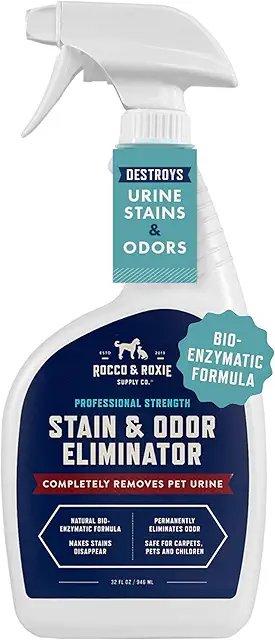
Rocco & Roxie Stain & Odor Eliminator
- Enzymes break down and completely eliminate the smell of urine
- Certified as safe for all carpets with the Carpet and Rug Institute (CRI) Seal of Approval
- Removes tough stains
- Also effective for feces and vomit
How to Remove Cat Urine From Carpets
This technique is highly effective at removing wet or dried cat pee smell. However, it's always recommended to check and follow the instructions for the product you are using.
Step 1. Blot Fresh Pee
If the cat urine is fresh and still wet, blot firmly with absorbent paper towels to remove as much as possible from both the surface of the carpet and deeper layers. Avoid rubbing, which will spread the urine further.
Step 2. Perform a Spot-Test
If you want to make sure that your carpet cleaner won't cause damage, test it on a small, inconspicuous area first.
Step 3. Soak With Enzyme Cleaner
Saturate the urine stain and twice the surrounding area, to include any splashes, with your enzyme cleaner. When cleaning carpet, since urine often penetrates into the deeper layers, rather than only spraying the surface, be generous and ensure the backing and padding are also saturated.

Step 4. After 10 Minutes Blot
The enzyme solution should be left for 10 minutes, then blotted with paper towels because the more urine that can be removed, the better.
Step 5. Re-Soak With Enzyme Cleaner
Saturate the pee and twice the surrounding area again. This time do not blot.
Step 6. Leave to Air Dry
Leave the enzyme solution to dry, which usually takes 24-48 hours. Do not use a fan to dry the area since the enzymes take time to work and must remain wet.
Step 7. Sniff Test
Once the enzyme cleaner has dried, sniff the area to ensure the pee odor has gone. If the smell is still present, repeat soaking and leaving it to air dry until it has completely disappeared. Usually, an area needs to be treated 1-3 times. It may be helpful to have a friend or family member sniff test your home since our noses can become accustomed to the smell.
Tips to Tackle Severe Odors
1. Pour, Don't Spray
For absorbent materials with deeper odors, remove the spray nozzle from the bottle and pour the enzyme cleaner directly onto the problem area.
2. Weighted Object
For mattresses, couches, and carpets, once the area has been thoroughly soaked, allow it to stand for an hour, then place several layers of absorbent towel with a weighted object on top to help draw the urine out.
3. Lift the Carpet
When cat urine has built up in the same area, if possible, the carpet may need to be peeled up to allow a thorough soaking of all the individual layers with an enzyme solution, including the carpet backing, padding layer, and subfloor.

4. Odor-Blocking Primer on the Subfloor
If the urine has penetrated the subfloor, which is the concrete or plywood underneath the carpet, and it still smells after being treated with an enzyme cleaner 2-3 times, apply two coats of Zinsser Odor Killing Primer, which is highly effective at blocking all remaining stains and smells.
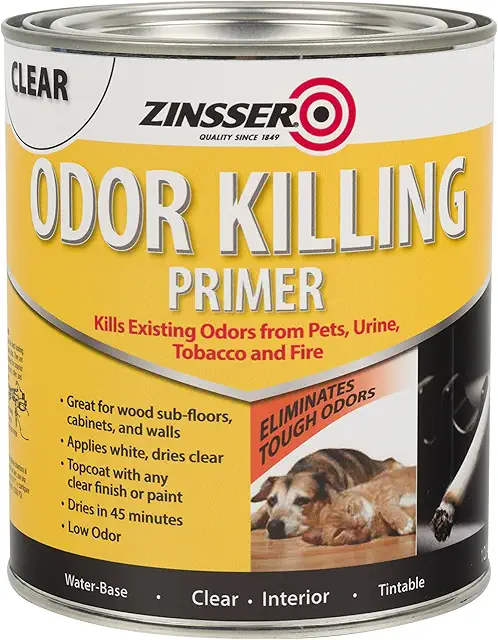
- A primer that can be used on all painted or unpainted interior surfaces, including subfloor, wood floors, cabinets, plaster, drywall, metal, masonry, PVC, and more
- Effectively seals and blocks strong pet odors and stains
5. Tackle Large Areas With a Garden Sprayer
To quickly and effectively cover a large area, use a garden sprayer, such as the reliable and affordable Chapin Garden Sprayer with a Gallon of Simple Solution Cat Extreme Stain & Odor Remover or a Gallon of Rocco & Roxie Stain & Odor Eliminator.
6. Replace the Carpet
In cases where cat urine has built up over time and the smell cannot be removed, you can either replace the entire carpet or only a small section of carpet, known as carpet patching. The subfloor should also be treated with an enzyme cleaner and, if required, apply a couple of coats of Zinsser Odor Killing Primer once dried.
7. Professional Cleaning Service
Hire professional cleaners with specialized equipment and carpet cleaning chemicals that have expertise in pet stain and odor removal.

How to Deter Cats From Peeing on the Carpet Again
Once the carpet has been cleaned, there are deterrents you can use to stop them from peeing in the same spot. However, deterrents alone won't work as there is always an underlying medical or behavioral cause that must also be managed. For more information, read our guide on Why Cats Pee Outside the Litter Box + How to Stop Them.

1. Remove Urine Odor With an Enzyme Cleaner
If cats can still smell pee on the carpet, they will likely continue using it as their toilet. Therefore, follow the steps above to break down and eliminate all traces of urine completely.
2. Block Access to the Target Area
During the process of getting your cat to only use the litter box, you may have to keep certain rooms closed or place a tall baby gate to prevent access temporarily. If your cat always targets the same carpeted area, moving a piece of furniture there, such as a bookshelf, may help.
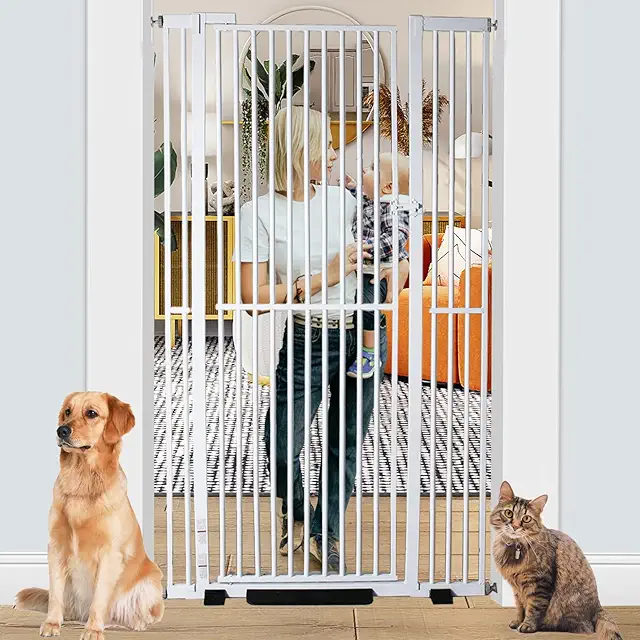
- If your cat urinates in one area of your house, prevent access with an extra-tall baby gate
- 71 inches (180 cm) tall, which most cats will not be able to jump over
- Narrow spaces between bars stop most cats from squeezing through
- Adjustable width to suit most spaces
- Sturdy and easy-to-install design
3. Change the Target Area's Function
Since cats are unlikely to pee where they eat, sleep and play, place a food bowl, water bowl, bed, or cat tree on the target area. You can also have regular play sessions with fishing rod-type toys, such as Da Bird or PurrSuit (UK), or place toys and catnip, such as Meowijuana Catnip, to redefine the area as a positive place for fun.

- Handmade fishing rod-style toy
- Extremely high-quality and durable (mine has not broken, unlike others)
- Irresistible to cats as its sound and movement mimic a real bird
- If your cat always urinates on a particular part of the carpet, have regular play sessions there to change the function of the area
4. Make the Site Unwelcoming
To make the area of carpet they urinate on uncomfortable, try placing aluminum foil or prickly Scat Mats for Cats there. Waterproof sheets could also be used to deter your cat, and if they do urinate on them, it will be easier to clean.
Since cats have sensitive noses and find citrus scents unpleasant, you could also place lemon-scented potpourri at the site or spray a lemon-scented fragrance on the carpet every 24 hours. Never use harsh techniques that may cause your cat stress and anxiety, such as spraying them with water or telling them off.
5. Place a Litter Box Where Your Cat Urinates
If possible, place a litter box at the site where your cat urinates on the carpet. If it's in an inconvenient location, after two weeks of them consistently using the box, gradually (a couple of inches a day) move it to a more suitable area.
How to Clean Other Items and Surfaces
Whichever item or surface you are cleaning in the home, we always recommend the following steps:
- Find all the urine stains in a dark room with a UV light, such as Simple Solution Urine Detector, and outline them with chalk or Painter's Tape, which can be removed without causing damage. Urine glows best under a UV light once it has dried and should fluoresce yellow or yellow-green.
- If your cat has just urinated, always blot up as much fresh urine as possible with paper towels.
- Use an enzyme cleaner, such as Rocco & Roxie Stain & Odor Eliminator or Simple Solution Cat Extreme Stain and Odor Remover, to permanently break down and neutralize the odor rather than temporarily cover it up.
- Spot-testing an inconspicuous area with cleaner is recommended to ensure it won't cause damage to the item or surface you are treating.
Carpet / Rugs: Saturate the affected area plus twice the surrounding area with the enzyme cleaner. After 10 minutes, blot with paper towels to draw out as much urine as possible, then re-soak and leave to air dry. Repeat as needed. Consider temporarily removing rugs until your cat is reliably using their litter box.
Clothes / Bedding / Bath Mats: For removing cat urine from machine-washable items, pre-treat the area with enzyme cleaner then wash as normal. Pick up clothes, remove bath mats, and prevent access to bedrooms until your cat uses their litter tray reliably.
Shoes: Saturate the shoes with an enzyme cleaner, blot after 10 minutes with paper towels to help remove cat urine, re-soak, and then leave to air dry. Repeat as necessary. If the shoes are machine-washable, follow the step above for laundry.
Mattress / Couch: Saturate the urine mark and twice the surrounding area with an enzyme cleaner. After 10 minutes, blot with paper towels to absorb as much urine as possible, re-soak the area and then leave to air dry. Repeat as necessary. If the urine has soaked deep into the mattress or couch cushion, pour enzyme cleaner directly onto the area, let it sit for an hour, then place several layers of absorbent paper towel with a weighted object on top to draw the urine out.
Leather: We recommend using Anti-Icky-Poo Odor Remover, which is safe for leather. Saturate with enzyme solution, blot after 10 minutes to extract as much urine as possible, re-soak, and leave to air dry. Repeat as necessary until the odor has gone.
Wooden / Concrete Floors: Spray an enzyme cleaner to soak the urine and twice the surrounding area, then leave it to air dry. Repeat if the odor is still detectable once it has dried. A garden sprayer, such as the Chapin Garden Sprayer, can be used with a Gallon of Simple Solution Cat Extreme Stain & Odor Remover or a Gallon of Rocco & Roxie Stain & Odor Eliminator if you have a large floor area to treat. When treating concrete or plywood subflooring, if the odor remains after 2-3 treatments, apply two coats of Zinsser Odor Killing Primer once dried.
Frequently Asked Questions
How to Stop a Cat Peeing on the Carpet
The first step is determining if a cat is peeing or spraying (urine marking), as they are different behaviors and are treated differently. Next, medical causes, such as cystitis, arthritis, chronic kidney disease, etc., should be ruled out. If your vet gives your cat a clean bill of health, there is likely an underlying behavioral cause, such as stress or not liking their litter tray. For further information, read Why Cats Pee Outside the Litter Box and How to Stop Them.
How Long Before Cat Urine Smells?
Cat urine has a sharp, acidic odor that is noticeable immediately after they have peed. If the urine is not promptly cleaned, the odor gradually becomes more pungent, musty, and unpleasant. This is because urine contains urea, which is broken down by bacteria in the environment into ammonia, the chemical responsible for the characteristic smell of old, stale urine.
Since the domestic cats' ancestors are desert-dwelling and drinking water was often limited, cats can produce highly concentrated urine, which is partly why cat urine smells more potent than dogs or humans. Tomcat (unneutered male) urine has an especially pungent odor. Health issues, such as urinary tract infections and diabetes, can also affect urine smell.
How Long Does Cat Pee Smell Last?
The smell of cat urine is very persistent, and although it may fade over time, it usually lingers for months or years without proper cleaning. Also, the odor may fade but become noticeable again on hot, humid days. Additionally, if it is not cleaned thoroughly, your cat will continue to smell their urine and think it's their toileting spot.
Exactly how long the smell lasts depends on the amount of urine present, the type of surface sprayed (if it is nonabsorbent or absorbent), and the degree of ventilation in the room. For example, the smell may never completely disappear from a room with little ventilation, such as the basement, if a large amount of urine has accumulated over time on an absorbent surface, such as carpet, upholstery, or concrete. However, if there's only a little urine on a non-absorbant surface, such as a stainless steel oven or glazed ceramic tiles, and the room is well-ventilated due to open doors and windows, the smell may fade sooner.
Why Does Cat Urine Smell Like Ammonia?
Urea is a component of urine, which is broken down by bacteria in the environment to ammonia, the chemical responsible for the characteristic smell of old, stale urine. Therefore, do not use ammonia-based cleaners since they smell like urine to cats and will encourage them to urinate where you have cleaned.
Can You Clean a Cat Urine Stain With Bleach?
Bleach is not usually recommended as it can cause discoloration or damage to many surfaces. It will also be problematic if it comes into contact with your cat. Additionally, mixing bleach with ammonia, a component of cat urine, can produce harmful fumes.
How to Tell Which Cat Is Peeing?
To identify which cat is peeing in your home, we recommend setting up a motion-activated pet camera, such as the Blink Mini Camera, where you tend to find urine.
Before pet cameras became so readily available, vets sometimes fed fluorescein dye strips in capsules to one cat at a time. A black-light would be shone on the urine, and if it was from the cat who had eaten the dye, it would glow a very bright yellow. However, the dye isn't always reliably excreted in the urine, so results can be unreliable, and the dye also causes permanent staining of furnishing.

- Motion-activated recording or watch live with two-way audio
- Night vision
- Easily monitor your cats at home
- Find out who is urinating outside the litter box
- Sometimes, the trigger for the behavior is captured
How Often Does a Cat Pee?
A healthy cat usually urinates 2-4 times per day.
How Much Does a Cat Pee?
Healthy cats produce 24-48 ml/kg of urine per day (1-2 ml/kg/hour). For example, a cat weighing 5 kg will make 120-240 ml of urine daily. If they urinate twice daily, they will produce 60-120 ml of urine each time. A cat with excessive urination due to chronic kidney disease, diabetes, or hyperthyroidism may produce more than 50 ml/kg of urine per day.


.jpg)


